A dispatch from the frontline of creative AI networking (spoiler alert – I survived and the catering was smashing).
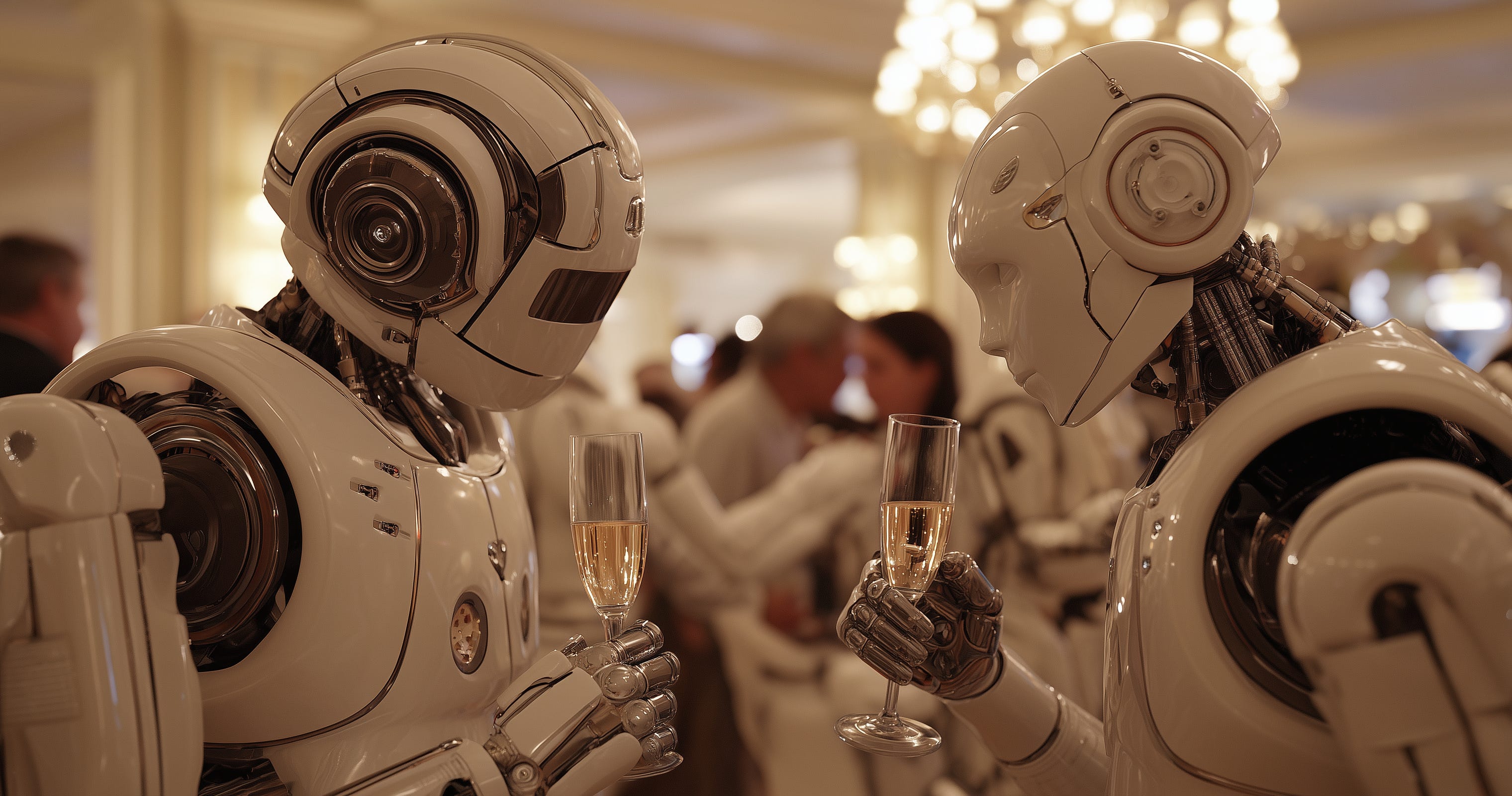
I just had a double whammy of creative AI meet-ups. One was at Silverside AI’s dazzling new London base in dank and drizzly Soho. The other was at a pre-Victorian hotel in bright and balmy Cambridge. Bit of a contrast, but both events turned out to be “next generation” (as it were).
San Francisco innovation lab Silverside AI made the Christmas Coca-Cola ad, and the Svedka Vodka ad for this Sunday’s Super Bowl, and their ingenious Creative Director, Hernán (Misho) Aloise Llera, offered some tantalising glimpses of the prompts deployed. They even recruited a mime artist to ensure that the Svedka Fembot’s moved like a human.
It was clear that TV and Film’s chronological structure – pre-production, production and post-production – does not apply to AI video creation. “Post is the new pre”, it was argued. The idea that an edited story with decent guide images should be the starting point for video generation was compared to tried and tested animation workflows, with everyone from Walt Disney to Pixar creating storyboard reels before moving on to full production.
Promise Director Ryan Phillips was as generous as ever in sharing his shorts (filmic ones) and his working practises. The shorts incuded “Dispatched”, which deployed Kling’s motion control to transform Ryan into a young woman, and told a twisty tale of last-minute deliverance in eighties London. “Winters Lament” was heartbreaking, and it was interesting to see the level of control that can be exercised by a director prompting with start and end frames.
Charlie Longren, Founder of WOMAIN AI, gave a producer’s overview of the AI video creation process, arguing persuasively that all the rights and legal issues should be discussed and settled at the very start, and that the creative AI process should allow time for iterations, loops, and tangents. Wherever possible, a period of experimental discovery should be built in to the timeline to get the best results.
In the roundtable, there were some entertaining discussions about the best ways of dealing with online refuseniks who dismiss our painstaking work as “slop”, and a suggestion that we should stop calling ourselves “AI creators” and call ourselves “AI Incels” instead (on the basis that we don’t get out much). Not sure I will be taking up that suggestion: I get enough funny looks as it is.
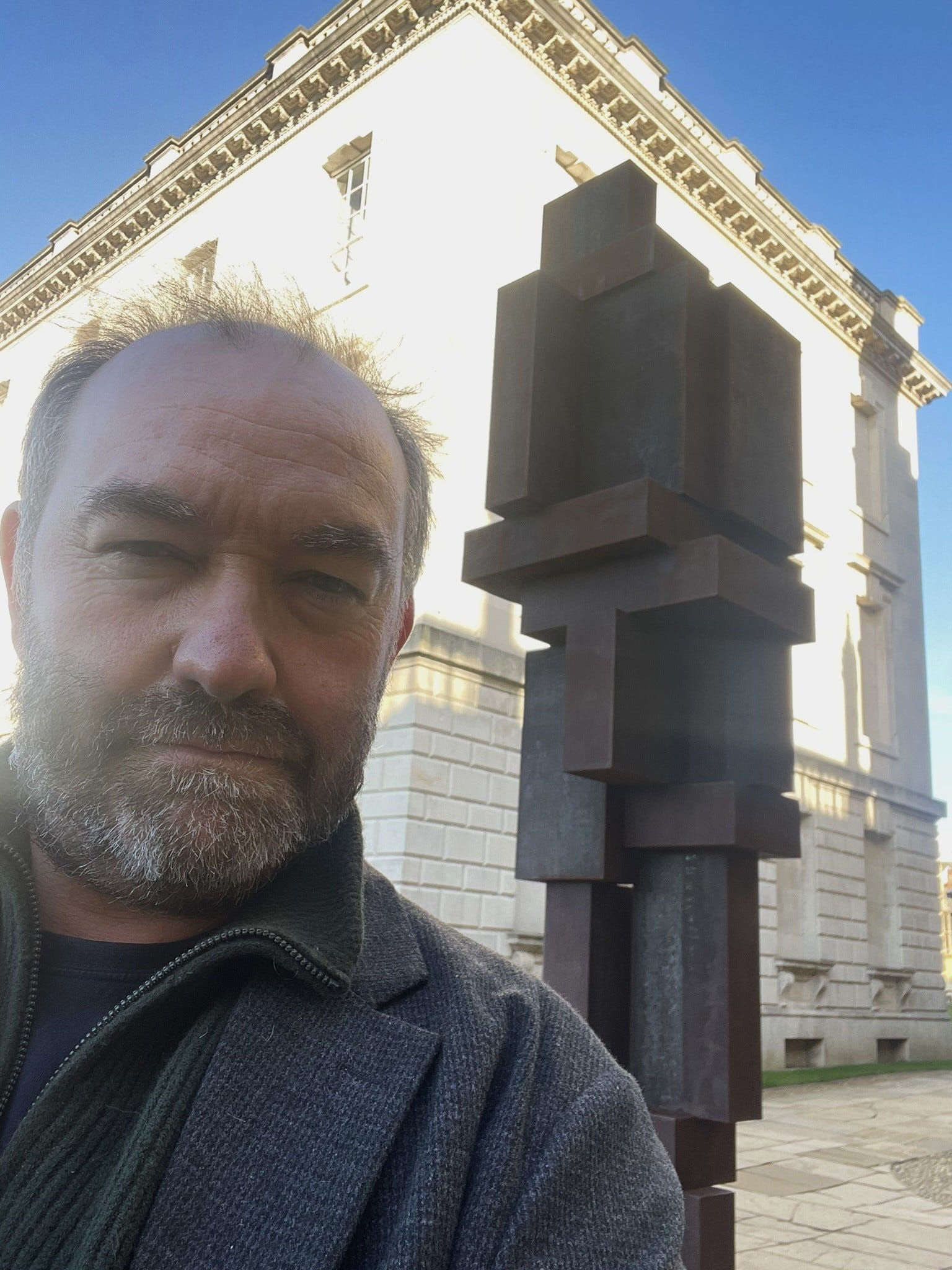
And, so on to Cambridge, which gave me a chance to revisit my old college; King’s. Here is a badly taken selfie with the college’s Alan Turing sculpture (I’m the one on the left).
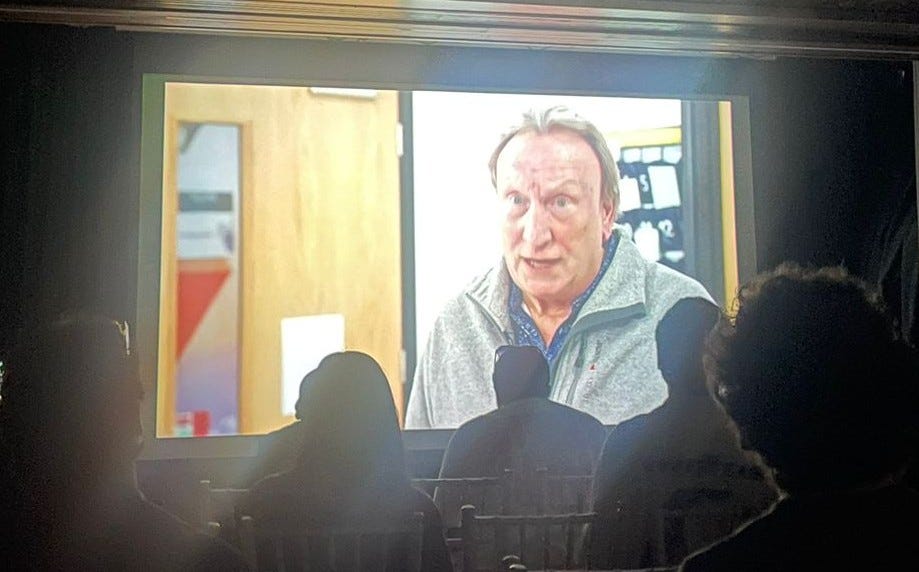
The Cambridge Film People and Royal Television Society combined forces to present “Reimagining Production with AI” at the University Arms Hotel.
The evening was hosted by the gifted and friendly filmmaker Colin Ramsay, who had interviewed many AI pioneers in making his documentary, “Rise of the Thinking Machines”.
Being Cambridge, the speakers all had eye-wateringly high IQs and the session offered a series of insights into the innermost workings of the machines, and some memorable thoughts on the post-digital space between us and the tech.
Dr Raffaella Folgieri had built her own LLM at home, and she said it shared many of her Italian characteristics. She offered an insight into the workings of artificial neurons, and passionately refuted suggestions that AI “parrots” stuff, or is simply “derivative”.
Dr Sarah Gibson Yates shared her experiences of screenwriting with an AI framework, and it was fascinating to see how she had collaborated with it. Her intriguing short focused on a teenager making therapeutic use of an LLM, which is increasingly the main way in which they are used.
Dr Sacha Krstulović was an inspiration. He has been working in the artificial intelligence sphere since 2001, and he outlined the latest uses of of AI in audio, from music composition and audio restoration to stem separation, voice transformation, and automatic mastering. Sacha revealed that proof of concept tracks created with AI tools had helped producers convince leading vocal artists to work with them – maybe AI can actually enable musicians to secure more work.
But that was not all. Vine’s Peter Noble demonstrated how they had used AI tools to de-age Bill Nighy for the Prime series “Lazarus”. And the highly entertaining Adam Morley revealed how he was creating an AI-led, interactive journey for visitors to Elstree Studios’ eagerly anticipated Immersive Experience. It’s sometimes easy to forget that humble stretches of Hertfordshire contain almost as much cinematic history as Hollywood. Maybe Elstree will prove as powerful a tourist magnet as neighbouring Leavesden’s Harry Potter Experience.
Both events were crammed with insights across extremely varied trerritory, and there was a sense of collaboration that comes partly from being part of something new, and partly from the open-hearted attitudes of everyone involved.
Excellent humans. Excellent AI.